
  • 1605 N Cedar Crest Blvd Suite 502 Allentown, PA 18104
What we do

Care for the discomfort of neuropathy.
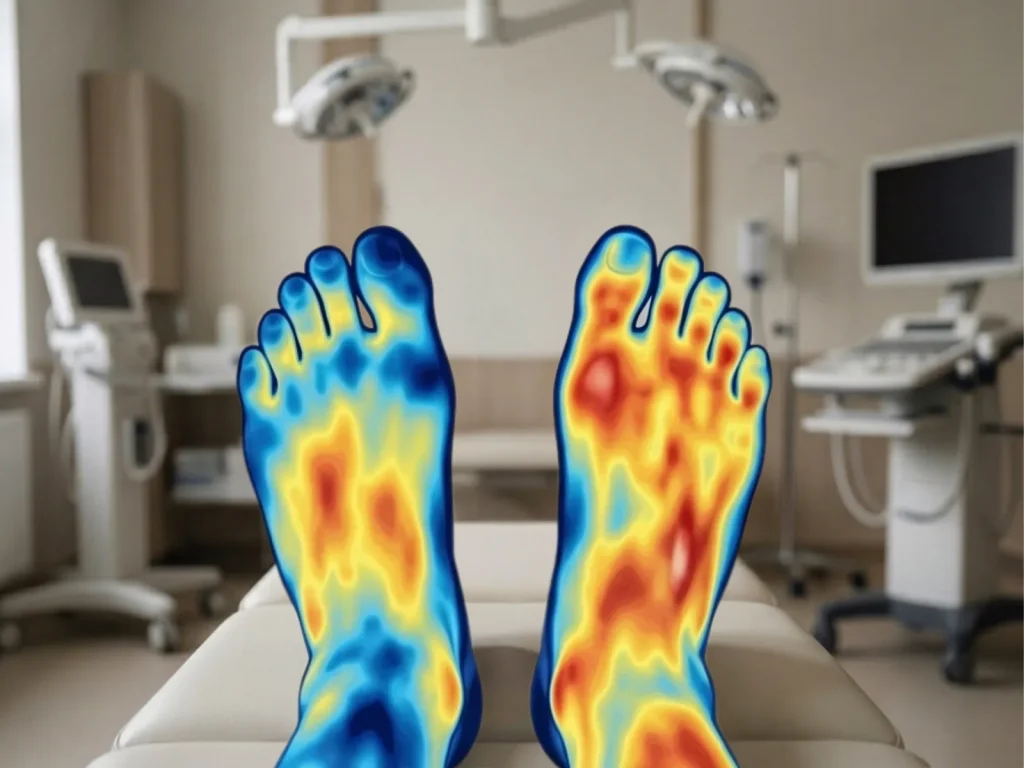
Peripheral neuropathy has many causes, and honesty matters here: our role is the mechanical and spinal side, working alongside the medical care that manages the underlying cause.
🤝 We coordinate with your medical team
👐 An honest assessment, and a straight answer
📍 Serving Allentown
Care for the foot discomfort of peripheral neuropathy in Allentown
Watch first

What this is, and what we can do about it

Intro to neuropathy
Neuropathy Promise
The short answer
Peripheral neuropathy is nerve damage that causes numbness, tingling, burning, or weakness, usually in the hands and feet, and it deserves an honest answer up front: chiropractic care does not cure it, and its most common causes are medical ones like diabetes. What a chiropractor can do is assess whether any mechanical or spinal factor is adding to your symptoms, work on that part, and coordinate with the medical care that manages the underlying cause.
Neuropathy attracts a lot of overblown promises, and we will not add to them. Here is the honest version: what peripheral neuropathy is, where chiropractic care genuinely fits, where it does not, and when your doctor needs to lead.

What is peripheral neuropathy?

It is damage or dysfunction in the peripheral nerves, the ones that carry signals between your spinal cord and the rest of your body. When they are affected, you feel it as numbness, tingling, burning, or weakness, most often in the feet and hands. It has many causes, and the most common by far is diabetes; others include injury, certain medications, and nerve compression.
Because the causes are so varied, the single most useful thing is an accurate picture of what is driving yours. Some of that is squarely medical and belongs with your doctor. A part of it, sometimes, is mechanical.

Where chiropractic care fits, and where it does not

Here is the honest boundary. Chiropractic care does not repair damaged nerves or resolve a systemic cause like diabetes, and we will never tell you otherwise. Where it can help is the mechanical side: if a nerve is being compressed or irritated where it exits the spine, or if joint and muscle problems are adding to your discomfort, that part is workable, and it is what we assess for.
So a first visit is about getting you an honest picture:
  • A careful assessment of whether a spinal or mechanical factor is contributing to your symptoms.
  • Hands-on care for any nerve-compression or joint-and-muscle component we find.
  • Movement and practical guidance to reduce mechanical load on an irritated nerve.
  • Coordination with the doctor managing the underlying cause, and a referral when that is the right call.
If your neuropathy is entirely medical, we will tell you that a chiropractor is not the answer to it, and point you to who is.

When it belongs with your doctor first

Neuropathy is often a signal from the rest of the body, so some of it is medical before it is anything else. New, spreading, or rapidly worsening numbness or weakness, symptoms alongside diabetes that is not well controlled, or any loss of function needs a medical work-up. Diabetic neuropathy in particular is managed medically, and good blood-sugar control does more for it than anything we offer. We work alongside that care, never instead of it.

What does an assessment cost, and do you take insurance?

No referral is needed to book an assessment, and we will go over the costs with you up front so there are no surprises. If all you need is an honest assessment and a straight answer about whether there is a mechanical component we can help with, that is a short conversation and we will keep it that way.

Neuropathy by the numbers

These are the figures this practice publishes about how common neuropathy is and how it is usually managed.
  • Peripheral neuropathy affects nearly 46.5 million Americans.
  • Approximately 150,000 patients per year have amputations due to neuropathy.
  • It is estimated that 60 to 70 percent of diabetics suffer from peripheral neuropathy.
  • 30 to 40 percent of all cancer patients have chemotherapy-induced peripheral neuropathy.
  • 90 percent of neuropathy sufferers depend on medications or injections to manage their symptoms.
  • Falls and hip fractures caused by the balance problems that come with neuropathy are rising.
  • No referral needed to book a first assessment.
  • We go over the costs with you before anything begins, so you know what to expect.
  • An honest read on whether there is a mechanical component, and a referral when there is not.
We cannot promise a specific outcome, and we will not promise to cure neuropathy, because that is not what this care does. Neuropathy care here is a complement to the medical management of its underlying cause, never a replacement for it.
About 13.5% of U.S. adults aged 40 and older have peripheral neuropathy, according to national survey data reported through the U.S. National Library of Medicine, and the share is far higher among people with diabetes. It is common, its causes are mostly medical, and an honest assessment is the right first step.
Source: Peripheral Neuropathy and All-Cause and Cardiovascular Mortality in US Adults, via the U.S. National Library of Medicine (PubMed Central). pmc.ncbi.nlm.nih.gov

An honest assessment, alongside your medical care.

Same-week visits for new patients. Come as you are, we will take it from there.

Why patients choose this care

An honest boundary, stated up front

Chiropractic care does not repair damaged nerves or resolve a systemic cause like diabetes, and we will say so plainly.

The mechanical and spinal side

That is our part, working alongside the medical care that manages the underlying cause.

An accurate picture of what is driving yours

The causes vary widely, so the most useful first step is working out which part of yours is mechanical and which is not.

What your care looks like

1

An assessment, not a course of care

The first visit is about getting an honest picture, nothing is assumed.
2

Sorting the mechanical from the medical

We work out which part of what you are feeling is spinal and which belongs with your doctor.
3

A straight answer

Either there is a mechanical component we can help with, or there is not, and we tell you which.
4

Working alongside your doctor

Where there is a role for us, it sits next to the medical care managing the cause, not instead of it.
In their words

Patients talking about their own neuropathy

No Longer Insulin Dependent, Rick is Free of Peripheral Neuropathy Pain
HakoMed® for Peripheral Neuropathy Relief: Jackie's Story
Allentown Neuropathy Patient pain free following Kirshner Health Solutions's protocol.
peripheral neuropathy
Patient testimonials

In their own words

“I had Peripheral Neuropathy and my doctor said nothing could be done. I’m glad I didn’t listen to him because I found relief with Dr. Kirshner.”
— Rick
“Eliminating Peripheral Neuropathy pain helped to re-engage in life.”
— Jackie
“I was skeptical at first and glad I put my trust in Dr. Kirshner.”
— Dallas
“I was really skeptical but I was already suffering terribly. I had nothing to lose. I’m glad I listened to Dr Kirshner.”
— Louise
Reviews

What patients say

⭐⭐⭐⭐⭐
“Flexible with changing scheduled appointments and responsive to need for replacement products. Always cheerful and interested in my progress noting the recent office arrival without use of a cane!”
Greg Emmons (MistoryE)
⭐⭐⭐⭐⭐
“Well informed information from the doctor, to the root of the problem. The staff were polite and friendly.”
Jerry Hartman
⭐⭐⭐⭐⭐
“A very concerned and interesting staff that all are working together to make you feel better. Always walk out better than walking in.”
Jay Alexander

Neuropathy questions we hear most

Honestly, no. Chiropractic care does not repair damaged nerves or resolve a medical cause like diabetes, and we will not claim it does. Where the assessment finds a mechanical or nerve-compression component adding to your symptoms, we can work on that part. For the underlying cause, your doctor leads and we coordinate.

For an honest assessment. Some neuropathy symptoms have a mechanical component, a nerve irritated or compressed along its path, that is workable, and some do not. A careful look tells you which, and either points to something we can genuinely help with or confirms that this belongs with your medical team.

Diabetes is the most common cause of peripheral neuropathy, so if you are diabetic it is very likely part of the picture, and that part is managed medically. Good blood-sugar control does more for diabetic neuropathy than anything we offer. We are glad to work alongside your medical care, not in place of it.

For the mechanical component, gentle chiropractic care has a strong safety record, and it is matched carefully to you. The first visit is a thorough history and check, precisely because neuropathy has medical causes we need to account for. If your picture calls for a medical work-up first, we will say so.

Numbness or weakness that is new, spreading, or worsening quickly, symptoms alongside poorly controlled diabetes, or any loss of function needs prompt medical attention rather than a course of care with us. Those are not something to work around; get them looked at medically.

You might also look at

Arm & leg pain

Radiating symptoms that sometimes start where a nerve exits the spine.

Carpal tunnel syndrome

A specific nerve compression at the wrist, assessed the same honest way.

Back pain

The low back a compressed nerve often traces back to.

Weight Loss New Patient Special

Complimentary consultation for our state-of-the-art weight loss program
  • Free consultation
  • Personalized weight loss program focused on healthy eating, real results, and no medications or injections

Chiropractic New Patient Special

$49
$49 includes a detailed consultation, posture analysis, and a full exam
  • Detailed consultation
  • Posture analysis
  • Full exam

Neuropathy New Patient Special

$49
$49 consultation and thermal scan
  • Detailed health history
  • Specialized neurosensory exam
  • Advanced thermal camera imaging to evaluate blood flow and nerve function